Pushing the Limits of Aluminium Crossover Alloys

Dr. mont. Patrick Willenshofer’s recent publication, “Influence of alloy chemistry and overaging on mechanical properties and corrosion resistance in aluminium crossover alloys”, is a remarkable contribution to the rapidly evolving field of advanced aluminium alloy development. This paper investigates the nuanced interplay between alloying elements and thermal history in novel AlMgZn-based crossover alloys enriched with copper … Continue reading Pushing the Limits of Aluminium Crossover Alloys

Leoben makes waves in fusion materials research

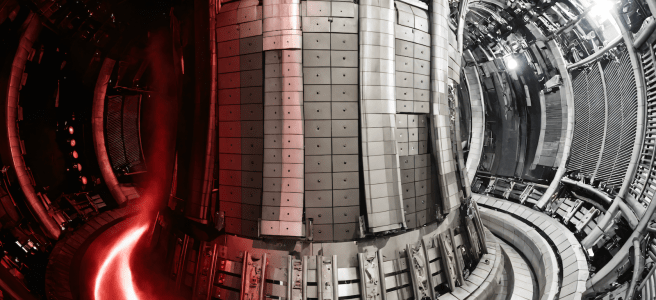
The [X-MAT] team at the Chair of Nonferrous Metallurgy, Montanuniversität Leoben, has drawn global attention with a groundbreaking study published in Advanced Science (DOI: 10.1002/advs.202417659). With more than 1k views and reads in the journal's first month after publication, our work challenges the prevailing high-entropy alloy (HEA) paradigm by proving that even simpler alloy systems can outperform their … Continue reading Leoben makes waves in fusion materials research

The Great Mentor of World’s Non-Ferrous Metallurgy

It is with great pride and heartfelt congratulations that we celebrate the recent recognition of Professor Peter Uggowitzer, who was awarded the Great Badge of Honour of the State of Styria on 12 May 2025 in a formal ceremony at the Old University in Graz. The honour was presented by Governor Mario Kunasek and Deputy … Continue reading The Great Mentor of World’s Non-Ferrous Metallurgy

Unlocking processability of recycled crossover aluminium alloys

Aluminum crossover alloys are an emerging class of materials designed to deliver a broad and balanced combination of mechanical strength, corrosion resistance, and formability. By blending the characteristics of traditional alloy families - 5xxx and 7xxx series alloys - they open new possibilities for high-performance applications in transportation, energy, and structural components. This versatility also … Continue reading Unlocking processability of recycled crossover aluminium alloys

Energising the AI Era and Beyond with Nuclear Microreactors

Feature image credits: Westinghouse’s eVinci microreactor, a cross-section of which is shown here, is one of two microreactors that will be tested by the U.S. Department of Energy. Westinghouse Electric Company. The race to meet the soaring energy demands of AI technologies and data centres is driving innovation at an unprecedented pace. One of the … Continue reading Energising the AI Era and Beyond with Nuclear Microreactors

Our work featured in the “Advanced Best of 2025” collection by Wiley!

Happy Easter to our friends all over the world! We are delighted to share that our recent publication, “Limitations of Hydrogen Detection After 150 Years of Research on Hydrogen Embrittlement”, has been selected for inclusion in the prestigious “Advanced Best of 2025” Collection by Wiley. The Advanced Portfolio from Wiley is a renowned family of high-impact journals, publishing cutting-edge research … Continue reading Our work featured in the “Advanced Best of 2025” collection by Wiley!

AMAG Crossalloy® – The new generation of recycled aluminium

A very nice article from the AMAG's AluReport on the challenges of recycling aluminium alloys and the AMAG's approach with the new aluminium crossover alloys! Aluminum is a cornerstone of modern engineering, offering unmatched lightweight properties, high recyclability, and versatility across industries. In transportation and aerospace, it is a key enabler of energy efficiency and … Continue reading AMAG Crossalloy® – The new generation of recycled aluminium

Aluminium + Diamond-Like Carbon for Next-Gen Hydrogen Fuel Cells

Our latest study just dropped as a preprint on the SSRN server: Is Nitrogen Doping of Diamond-Like Carbon Films a Viable Strategy for Bipolar Plates in Proton Exchange Membrane Fuel Cells? 💡 In this work, we challenge the idea that nitrogen doping improves Diamond-Like Carbon (DLC) coatings. Using a combination of electrochemical testing, electron microscopy, … Continue reading Aluminium + Diamond-Like Carbon for Next-Gen Hydrogen Fuel Cells