The world of culture and the world of science lost a singular figure yesterday when Sir Patrick Stewart passed away on 28 October 2026 at his home in Los Angeles. He was 86. Most will remember him as the embodiment of Captain Jean-Luc Picard or Professor Charles Xavier — roles he imbued with a Shakespearean … Continue reading Thank You, Captain! R.I.P. Sir Patrick Stewart
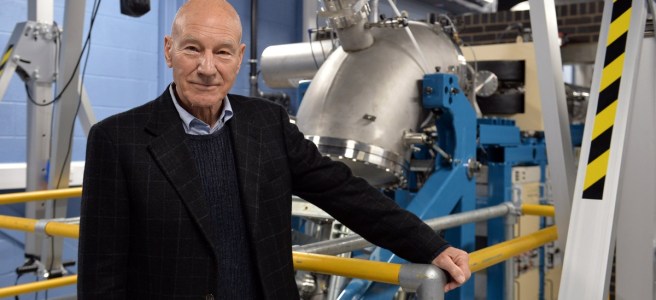
Why I Remain Optimistic About the Future of Mankind
Following recent conversations with friends and colleagues, Prof. Cláudio G. Schön, Prof. Ernst Kozeschnik and Dr. Johannes Österreicher, I have come to the conclusion that we should be more optimistic about the future of mankind, and of science, and physics in particular. This holds even when we take into account the geopolitical challenges of the … Continue reading Why I Remain Optimistic About the Future of Mankind
Built for cars, but ready for space: A warm welcome to AMAG CrossAlloy®57!
For decades, aluminium alloys forced a choice: the 5xxx family is easy to form but only moderately strong, while the 7xxx family is strong but difficult to process. The crossover concept, developed at Montanuniversität Leoben by the research group of Prof. Stefan Pogatscher, removes that trade-off. A tuned combination of magnesium, zinc and, in some … Continue reading Built for cars, but ready for space: A warm welcome to AMAG CrossAlloy®57!
On the 3D printing of novel aluminium crossover alloys
Aluminium crossover alloys are one of the more interesting recent developments in light metals. Rather than staying within the traditional wrought families, they deliberately blend the chemistries of the AA5xxx and AA7xxx systems, and in doing so they form the compositionally complex T-phase, Mg32(Al,Cu)49, which gives a remarkable hardening response and has already attracted serious … Continue reading On the 3D printing of novel aluminium crossover alloys
Warm in Winter, Cool in Summer
A Breakthrough Discovery from the Beihang University' Brazil Centre A wall that knows when to keep you warm and when to keep you cool — that's the elegant idea behind a remarkable new breakthrough from Beihang University, published in the top-tier journal Advanced Materials. A team led by Associate Researcher Ding Yilin and the brilliant … Continue reading Warm in Winter, Cool in Summer
Rethinking how cold spray really bonds dissimilar metals
Cold spray sounds almost too simple to work: fire a metal particle at a surface fast enough, and it sticks – no melting, no welding, just brute plastic deformation smashing a bond into place. That has been the textbook story for two decades. But in our latest paper with colleagues at Politecnico di Milano and … Continue reading Rethinking how cold spray really bonds dissimilar metals
One-grain-at-a-time: how in situ EBSD rewrote sink-strength theory for space aluminium
Ultrafine-grained (UFG) aluminium alloys are strong candidates for space structures: their dense grain-boundary network acts as sinks that absorb radiation-induced defects (more in our perspective review https://doi.org/10.1021/acsmaterialsau.5c00139). But that advantage only survives if the microstructure does — and in Low-Earth Orbit, sunlit components reach ~200 °C, right where severely deformed aluminium begins to recrystallise. The … Continue reading One-grain-at-a-time: how in situ EBSD rewrote sink-strength theory for space aluminium
Folding, thinner, lighter, and stronger wings signals a quiet retreat for aluminium in aerospace
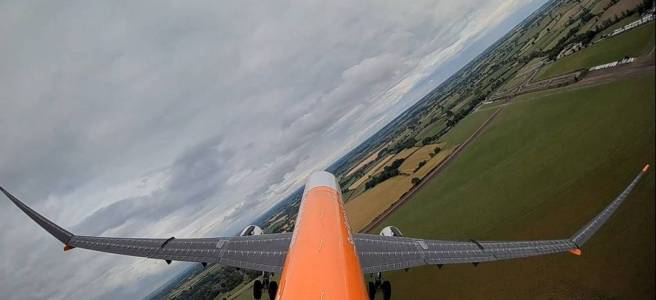
Airbus has just announced the next phase of its Wing of Tomorrow programme: a three-year flight-test campaign, unveiled at Farnborough, that will bolt full-scale wing extensions onto an A321neo to trial the longer, higher-aspect-ratio wings destined for the successor to its best-selling single-aisle family. The extensions are several metres long and stand in for a … Continue reading Folding, thinner, lighter, and stronger wings signals a quiet retreat for aluminium in aerospace
Rethinking copper metallurgy for the future of fusion reactors
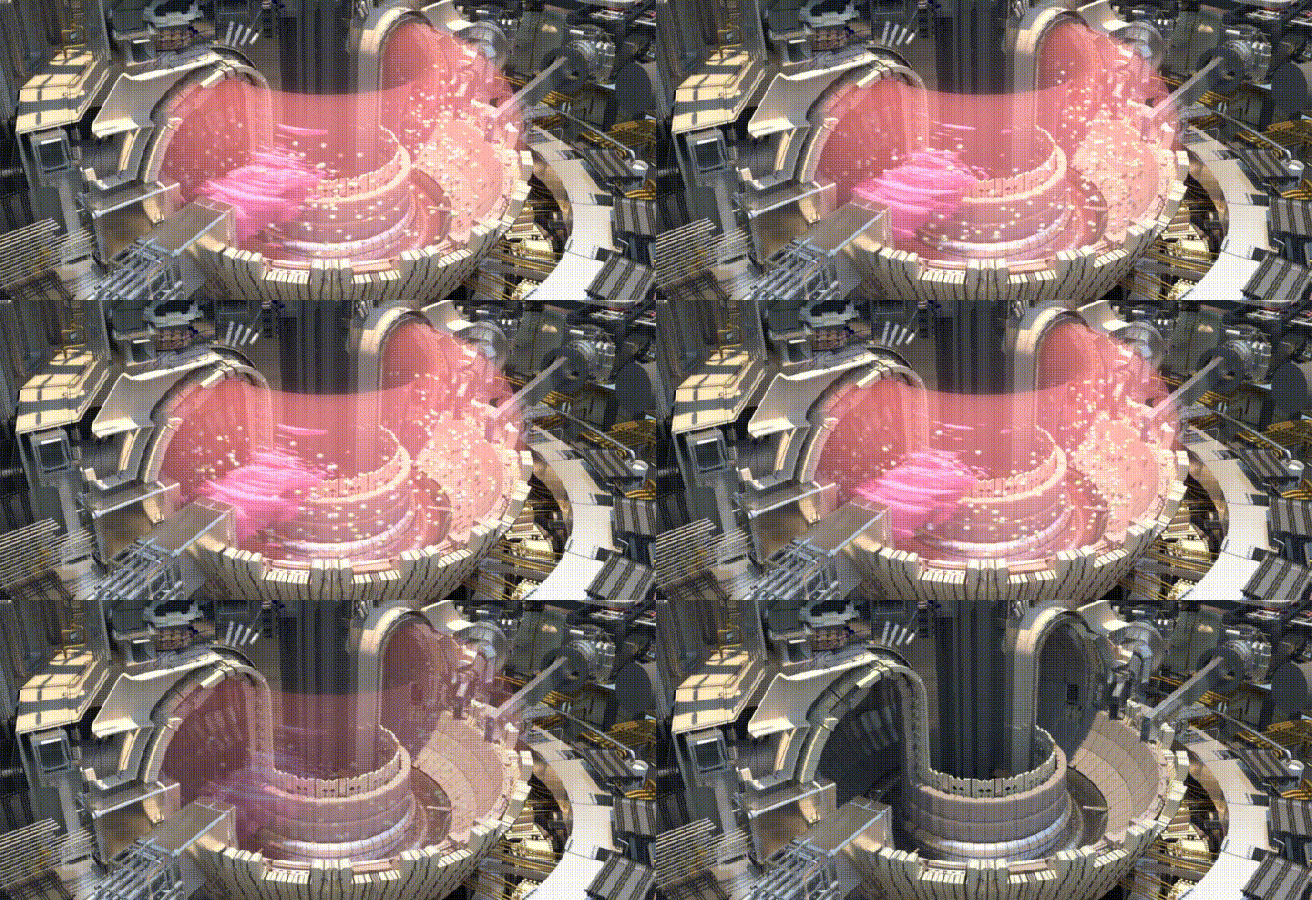
We are delighted to share a new preprint that takes on one of fusion energy's most stubborn materials problems: building a heat sink that can survive inside a reactor. Commercial fusion demands components that withstand intense neutron bombardment while extracting punishing heat loads for conversion to electricity, and CuCrZr — a copper alloy strengthened by … Continue reading Rethinking copper metallurgy for the future of fusion reactors
How much radiation damage can you do in seconds?
Qualifying materials for future fission and fusion reactors is painfully slow. Neutron irradiation is costly, time-consuming and leaves samples radioactive, while ion-beam alternatives require competitive proposals and scheduled beam time at oversubscribed accelerator facilities. In a new preprint, we ask whether an instrument already sitting in many microscopy labs — the plasma focused ion beam … Continue reading How much radiation damage can you do in seconds?