A decade probing the radiation response of Ti-based MAX phases
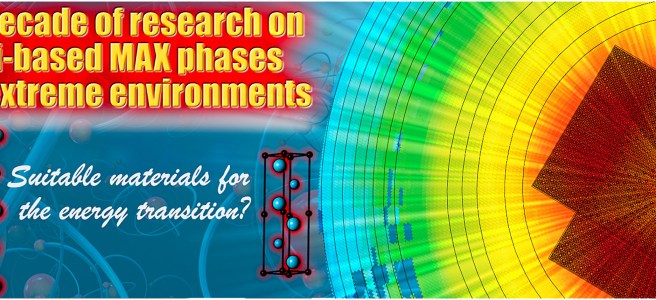
Can Ti-based MAX phases -- this new class of potential functional materials -- be applied in future nuclear reactors? We investigated the response of Ti-based MAX phases to both neutrons and heavy ions. The discoveries of this intense decade-long research has just been published at Materials Today Energy. Open access article access here: https://doi.org/10.1016/j.mtener.2022.101186

Metal alloy “hides” magnetic material with potential to enhance electronic devices

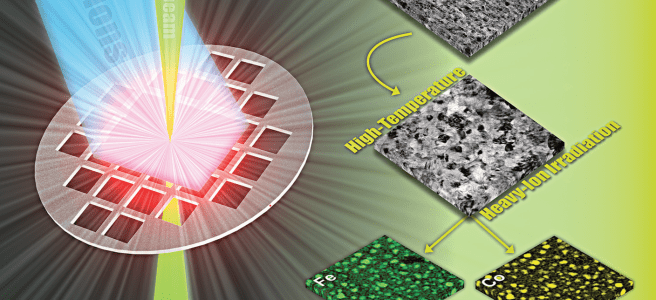
Despite their diminutive size, iron and cobalt nanoislands have strong magnetism, which can increase storage and data transfer capacity. Original story by Jornal da USP. Published: 01/10/2022  Updated: 01/11/2022 at 16:52 By Júlio Bernardes Researchers have evaluated the radiation resistance of highly concentrated metal alloys for use in nuclear reactors and have identified materials with … Continue reading Metal alloy “hides” magnetic material with potential to enhance electronic devices

MATLAB now fully integrated with SRIM!

We have completed -- once and for all -- a full integration of MATLAB with the SRIM code. Now the MATLAB code features the possibility to calculate displacement-per-atoms (DPA) in a wide variety of conditions and using all existing DPA methodologies (R.E. Stoller with quick-damage and Y. Zhang with full cascades). Calculations are performed in … Continue reading MATLAB now fully integrated with SRIM!

The interplay of H in degrading Zr and its alloys

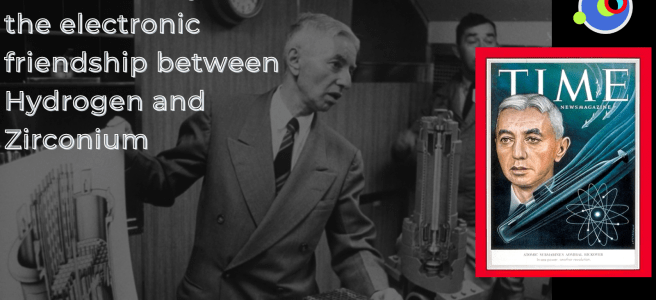
In a recent talk, I address the problem of H in deteriorating severely the properties of the most important metal in nuclear industry, Zr, due to the formation of the Zr hydrides. A throughout good paper H effects in metals was recently written by Professor Milos Djukic, which I highly recommend reading. Abstract The decision … Continue reading The interplay of H in degrading Zr and its alloys

First anthropogenic quasicrystal was synthesized under extreme conditions

An one-of-a-kind piece of research, Geologists and Geophysicists from Italy and USA discovered the first known antropogenic quasicrystal. It was synthesized during the first atomic test at Alamogordo in New Mexico (USA) in July 16th 1945. The research has been published in the Proceedings of the National Academy of Sciences. Link for the paper of … Continue reading First anthropogenic quasicrystal was synthesized under extreme conditions

This is Zircaloy-4: the material that revolutionized the nuclear industry.

This is from my archives (2013), I found this beautiful piece of video showing Zircaloy-4 being cut in a Lathe and firing up at the Polytechnic School of University of São Paulo, the place where I proudly did my master in metallurgy with focus in nuclear engineering and nuclear materials under Professor C.G. Schön! Beautiful … Continue reading This is Zircaloy-4: the material that revolutionized the nuclear industry.

High-entropy alloys are indeed radiation resistant. What about the high-entropy?

In another great collaboration with Oak Ridge National Laboratory and Universities of Huddersfield, Leoben and São Paulo, we have investigated in depth the radiation response of a FeCrMnNi high-entropy alloy (HEA) compared with a commercial austenitic stainless steel. Yes, the HEA outperforms the steel by a 80% margin when thermodynamic stability of the matrix phase … Continue reading High-entropy alloys are indeed radiation resistant. What about the high-entropy?

Nuclear Mystery from IAEA: “Low Levels of Radioisotopes Detected in Europe Likely Linked to a Nuclear Reactor”

28/2020Vienna, Austria https://www.iaea.org/newscenter/pressreleases/low-levels-of-radioisotopes-detected-in-europe-likely-linked-to-a-nuclear-reactor-iaea The recent detection of slightly elevated levels of radioisotopes in northern Europe is likely related to a nuclear reactor that is either operating or undergoing maintenance, when very low radioactive releases can occur, the International Atomic Energy Agency (IAEA) said today. The geographical origin of the release has not yet been determined. … Continue reading Nuclear Mystery from IAEA: “Low Levels of Radioisotopes Detected in Europe Likely Linked to a Nuclear Reactor”

Are TiN coatings appropriate candidates for accident tolerant fuels?

I am so delighted to announce that our paper "Energetic particle irradiation study of TiN coatings: are these films appropriate for accident tolerant fuels?" has just been accepted for publication at the Journal of Nuclear Materials! In this study, we have used heavy ion irradiation in situ within a Transmission Electron Microscopy to investigate whether Titanium Nitride … Continue reading Are TiN coatings appropriate candidates for accident tolerant fuels?