Feature image credits: Westinghouse’s eVinci microreactor, a cross-section of which is shown here, is one of two microreactors that will be tested by the U.S. Department of Energy. Westinghouse Electric Company. The race to meet the soaring energy demands of AI technologies and data centres is driving innovation at an unprecedented pace. One of the … Continue reading Energising the AI Era and Beyond with Nuclear Microreactors
Category: Nuclear Materials Newsletter
Who is leading the critical technology race?
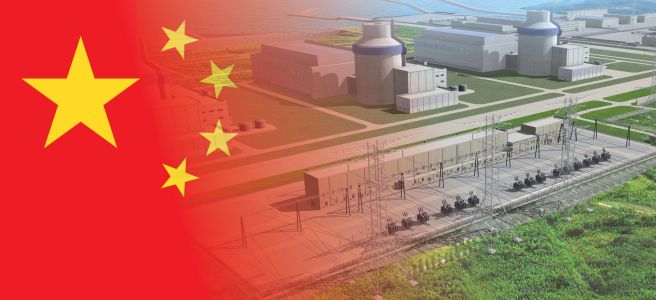
For anyone interested in global technological and scientific advancements, ASPI’s Tech Tracker offers a fascinating deep dive into critical and emerging industries. One of the most striking insights from the platform is China’s clear dominance in nuclear energy. With extensive research, rapid reactor deployments, and significant government support, China has positioned itself as a world … Continue reading Who is leading the critical technology race?
MATDPA: Integration of SRIM2013 into MATLAB for nuclear materials calculations
I am happy to announce that the first public version of MATDPA is now available on GITHUB for public download. MATDPA is a collection of MATLAB scripts that I wrote to speed-up and automatize nuclear materials irradiation calculations. To install MATDPA in your machine (only Windows because Apple does not allow to run WINE anymore!), … Continue reading MATDPA: Integration of SRIM2013 into MATLAB for nuclear materials calculations
Professor Yanwen Zhang to join Queen’s University as a Canada Excellence Research Chair
Congratulations to Professor Yanwen Zhang on her appointment as the next Canada Excellence Research Chair for the Impact of Radiation in Energy and Advanced Technologies at Queen's University. As long-standing collaborators, we are proud to see her continue developing leading the next materials science for extreme environments! The team at materialsatextremes.com wishes her all the … Continue reading Professor Yanwen Zhang to join Queen’s University as a Canada Excellence Research Chair
Exploring the Stability of Ti-based MAX Phases in Extreme Nuclear Environments
We are excited to share findings from our latest research on the potential use of MAX phases in nuclear reactors. MAX phases, known for their hexagonal-compact nanolayered crystal structure, high machinability, and chemical inertness, have long been considered promising materials for nuclear applications. However, our new paper sheds light on crucial aspects that must be … Continue reading Exploring the Stability of Ti-based MAX Phases in Extreme Nuclear Environments
Advancing microreactor materials technology: Next stop, the Moon!
Miniaturizing nuclear reactors offers a robust solution for generating reliable and efficient electricity, crucial for supporting human missions beyond Earth. Such miniturization is not at all an easy task. I have been pursuing research in this area since 2015, when we designed a ~ 3x3 metre-sized small nuclear reactor core for biological shielding optimization studies. … Continue reading Advancing microreactor materials technology: Next stop, the Moon!
Nuclear Materials Highlights – Issue #2
Dear Friends! We would like to wish you an excellent 2022 start with great accomplishments in life and research! This year starts a great promise with the commission of the James Webb space telescope, which holds the future of astronomy and astrophysics! With the beginning of the new year, we will resume the Nuclear Materials … Continue reading Nuclear Materials Highlights – Issue #2
Metal alloy “hides” magnetic material with potential to enhance electronic devices
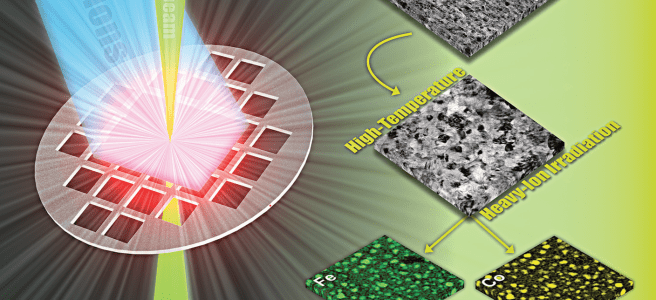
Despite their diminutive size, iron and cobalt nanoislands have strong magnetism, which can increase storage and data transfer capacity. Original story by Jornal da USP. Published: 01/10/2022 Updated: 01/11/2022 at 16:52 By Júlio Bernardes Researchers have evaluated the radiation resistance of highly concentrated metal alloys for use in nuclear reactors and have identified materials with … Continue reading Metal alloy “hides” magnetic material with potential to enhance electronic devices
Nuclear Materials Biweekly Highlights – #1
We initiate today a new series of posts in the blog targeting an specific niche of the materials at extremes community: the nuclear materials biweekly highlights. In this bimonthly newsletter, we will be covering some special picks of scientific research and development within the nuclear materials community. Obviously, the picks are made by this editor, … Continue reading Nuclear Materials Biweekly Highlights – #1