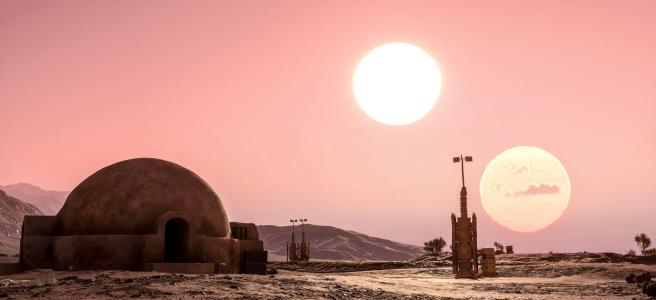
Miniaturizing nuclear reactors offers a robust solution for generating reliable and efficient electricity, crucial for supporting human missions beyond Earth. Such miniturization is not at all an easy task. I have been pursuing research in this area since 2015, when we designed a ~ 3x3 metre-sized small nuclear reactor core for biological shielding optimization studies. … Continue reading Advancing microreactor materials technology: Next stop, the Moon!
Category: Space Technology
Montanuniversität Leoben highlights its research in Space
On 8th November 2023, the Montanuniversität Leoben hosted a special event to introduce its research and development strategy for Science in Space in collaboration with the European Space Agency. The new rector, Professor Peter Moser, stressed the necessity for new materials as humankind ventures further into space. Professor Moser also mentioned the extreme conditions of … Continue reading Montanuniversität Leoben highlights its research in Space
New H-based materials for use in micro-nuclear-reactors
We just got a preprint available in arXiv.org for the general audience: "Fabrication of bulk delta-phase Zirconium Hydride from Zircaloy-4 for use as moderators in microreactors" (arXiv:2305.02249v1) In this manuscript, we performed a complete electron-microscopy characterization of the delta-phase Zirconium Hydride (delta-ZrH) currently under manufacturing, research and development to be used as moderator materials in … Continue reading New H-based materials for use in micro-nuclear-reactors
Nanocrystalline lightweight alloys for space exploration
We continue in our saga aiming at finding better radiation-resistant materials for applications in the extreme environment of the solar system. I am delighted to introduce you our new paper that was led by Patrick Willenshofer (another genius from Montanuniversitaet Leoben). In this paper, we introduce a revolutionary nanocrystalline crossover aluminium alloy that scored the … Continue reading Nanocrystalline lightweight alloys for space exploration
The solar system as a new frontier for materials at extremes
Sharing my new seminar slides with the community on the challenges to design and evaluate new materials for extraterrestrial applications! This research has been only possible via an international collaboration with the brilliant metallurgy minds present at the Montanuniversität Leoben! Super interesting new works coming very very soon! Available at the ResearchGate! (LA-UR-22-23107) https://www.researchgate.net/publication/359771021_The_solar_system_as_a_new_frontier_for_materials_at_extremes
Why solar geomagnetic storms destroy satellites like SpaceX Starlink
The sun is in a new solar cycle, with space weather experts expecting geomagnetic storms to worsen and increase the risk to valuable satellites. — Read on http://www.cnbc.com/amp/2022/02/09/why-solar-geomagnetic-storms-destroy-satellites-like-spacex-starlink.html
Parker Solar Probe: on its way to meet the Sun!
The Parker Solar Probe just encountered an intense energetic particle radiation stream on its way to the Sun. A beautiful video from NASA! Particle irradiation emitted by the Sun's and its effects on functional metallic alloys it is one of our most important research fields nowadays. https://www.youtube.com/watch?v=IQXNqhQzBLM
On “alien technology” and materials science
We should be categorical here: the question if we are alone in the Universe remains yet unanswered. Nevertheless, several government bodies are now publicizing the issue with enormous coverage by the mass-media, and these facts has also motivated my attention to the problem from a scientific perspective. In a recent public report, the US intelligence … Continue reading On “alien technology” and materials science
Timelapse of the future of the universe
The vastness and the beauty of the universe one day will come to an end. Worthwhile to spend 30 minutes of your life to watch this marvelous video from @MelodySheep: https://www.youtube.com/watch?v=uD4izuDMUQA
Oumuamua: the mystery continues!
The mystery of ’Oumuamua, the first interstellar object ever observed, continues to deepen. A new analysis argues that if it were a comet, it would have broken apart as it passed near the sun. Nice text by: Ramin Skibba (Quanta Magazine) https://getpocket.com/explore/item/interstellar-visitor-found-to-be-unlike-a-comet-or-an-asteroid?utm_source=pocket-newtab