Magnetic nanoislands: our interview to “Jornal da USP”

Our interview to Journal da USP is now online, in Portuguese: https://jornal.usp.br/ciencias/liga-metalica-esconde-material-magnetico-com-potencial-para-aprimorar-dispositivos-eletronicos/ A link with an English translation provided by Google is here: https://jornal-usp-br.translate.goog/ciencias/liga-metalica-esconde-material-magnetico-com-potencial-para-aprimorar-dispositivos-eletronicos/?_x_tr_sl=auto&_x_tr_tl=en&_x_tr_hl=en-US

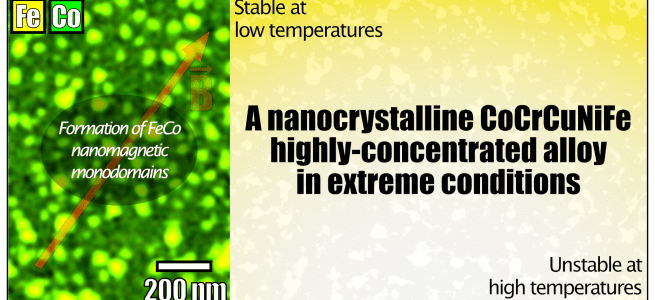
Discovery of FeCo nanomagnets under irradiation in a high-entropy alloy

A modified version of the well-known Cantor's alloy, the nanocrystalline CoCrCuFeNi high-entropy alloy was subjected to heavy-ion irradiation in situ within a TEM in our most recent study within the field of potential new nuclear materials. The stability of the alloy was investigated in a broad range of irradiation doses and temperature, revealing the nucleation … Continue reading Discovery of FeCo nanomagnets under irradiation in a high-entropy alloy

Nuclear Materials Biweekly Highlights – #1

We initiate today a new series of posts in the blog targeting an specific niche of the materials at extremes community: the nuclear materials biweekly highlights. In this bimonthly newsletter, we will be covering some special picks of scientific research and development within the nuclear materials community. Obviously, the picks are made by this editor, … Continue reading Nuclear Materials Biweekly Highlights – #1

MATLAB now fully integrated with SRIM!

We have completed -- once and for all -- a full integration of MATLAB with the SRIM code. Now the MATLAB code features the possibility to calculate displacement-per-atoms (DPA) in a wide variety of conditions and using all existing DPA methodologies (R.E. Stoller with quick-damage and Y. Zhang with full cascades). Calculations are performed in … Continue reading MATLAB now fully integrated with SRIM!

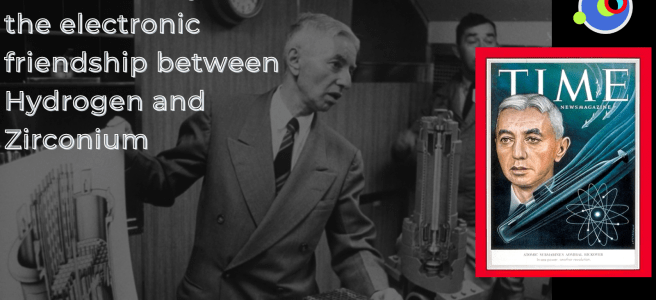
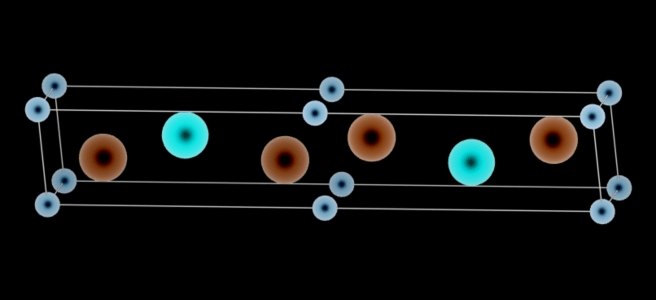
The interplay of H in degrading Zr and its alloys

In a recent talk, I address the problem of H in deteriorating severely the properties of the most important metal in nuclear industry, Zr, due to the formation of the Zr hydrides. A throughout good paper H effects in metals was recently written by Professor Milos Djukic, which I highly recommend reading. Abstract The decision … Continue reading The interplay of H in degrading Zr and its alloys

Nuclear Mystery from IAEA: “Low Levels of Radioisotopes Detected in Europe Likely Linked to a Nuclear Reactor”

28/2020Vienna, Austria https://www.iaea.org/newscenter/pressreleases/low-levels-of-radioisotopes-detected-in-europe-likely-linked-to-a-nuclear-reactor-iaea The recent detection of slightly elevated levels of radioisotopes in northern Europe is likely related to a nuclear reactor that is either operating or undergoing maintenance, when very low radioactive releases can occur, the International Atomic Energy Agency (IAEA) said today. The geographical origin of the release has not yet been determined. … Continue reading Nuclear Mystery from IAEA: “Low Levels of Radioisotopes Detected in Europe Likely Linked to a Nuclear Reactor”

External Events: how safe a nuclear reactor can be?

The development of nuclear technology has allowed unprecedented progress for mankind. Modern medicine could not be the same without the numerous diagnosis protocols involving the application of concepts and products directly (and indirectly) derived from nuclear engineering. On nuclear reactors, it is unquestionably how cost-competitive, clean, environmentally-friendly and powerful electricity can be generated by using … Continue reading External Events: how safe a nuclear reactor can be?