In a recent study conceptualized and performed by Dipl.-Ing. Philip Aster – currently working towards his PhD thesis – we explored how adding copper (Cu) to aluminum alloys can improve their strength and flexibility. Aluminum alloys are widely used because they are strong yet lightweight, but balancing these properties can be challenging. By focusing on … Continue reading Making stronger aluminium alloys by optimising chemistry
Tag: science
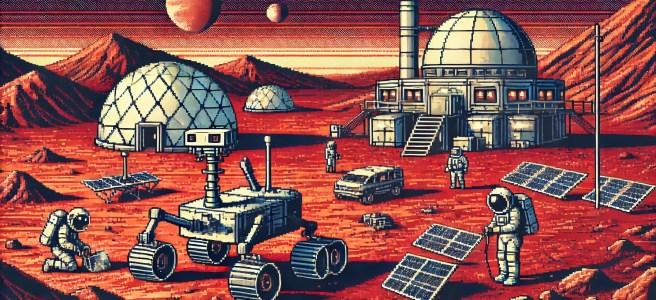
Radiation shielding for nuclear-fission powered human-based Mars missions
As multinational space programs progress towards establishing permanent human settlements beyond Earth, radiation shielding and damage continue to pose significant challenges. A fascinating recent paper discussing radiation shielding in the context of future nuclear-fission-powered Mars missions has been published in Nuclear Science and Technology Open Research. Bendoyro AC, Thomas LD, Cassibry J and Emrich W. … Continue reading Radiation shielding for nuclear-fission powered human-based Mars missions
Microstructural Characterization of Nanostructured Aluminium Crossover Alloys under Thermal Loading
We are happy to share the publication of our latest paper titled “Comparative analysis of experimental techniques for microstructural characterization of novel nanostructured aluminium alloys” on Materials Characterization. In this study, we delve into the intricacies of using various experimental techniques to analyze the microstructures of an ultrafine-grained AlMgZnCuAg crossover alloy under themal loading. Through … Continue reading Microstructural Characterization of Nanostructured Aluminium Crossover Alloys under Thermal Loading
Our review article on hydrogen embrittlement and detection
We are excited to share our latest review paper titled "Limitations of Hydrogen Detection After 150 Years of Research on Hydrogen Embrittlement" in the Advanced Engineering Materials. This comprehensive review paper explores a critical challenge in our quest to harness hydrogen as a sustainable energy source—detecting its effects on materials at the nanoatomic level. Hydrogen's … Continue reading Our review article on hydrogen embrittlement and detection
“In the world of science, change is the only true constant” – Professor Peter J. Uggowitzer
I recommend all the materialsatextremes.com audience to spend sometime reading this marvelous interview given by Professor Peter Uggowitzer to the AluReport, a publication from AMAG Austria Metall AG! https://alureport.com/issues/issue-02-24/article/the-development-of-scientific-expertise-at-amag-a-success-story Image: Prof. Peter Uggowitzer, Chair of the Scientific Advisory Board of AMAG. Credits: AMAG/AluReport. In this recent interview with AluReport, Prof. Peter Uggowitzer, Chair of the Scientific … Continue reading “In the world of science, change is the only true constant” – Professor Peter J. Uggowitzer
Why the scientific progress is slowing down? Sabine Hossenfelder explains
Very nice video about the contemporary scientific world, metrics and production. How can we return to the golden age of the 1960s? How can we support more fundamental science without jeopardizing the strong and important link between science, technology and industry? https://www.youtube.com/watch?v=KBT9vFrV6yQ
Professor Yanwen Zhang to join Queen’s University as a Canada Excellence Research Chair
Congratulations to Professor Yanwen Zhang on her appointment as the next Canada Excellence Research Chair for the Impact of Radiation in Energy and Advanced Technologies at Queen's University. As long-standing collaborators, we are proud to see her continue developing leading the next materials science for extreme environments! The team at materialsatextremes.com wishes her all the … Continue reading Professor Yanwen Zhang to join Queen’s University as a Canada Excellence Research Chair
Exploring the Stability of Ti-based MAX Phases in Extreme Nuclear Environments
We are excited to share findings from our latest research on the potential use of MAX phases in nuclear reactors. MAX phases, known for their hexagonal-compact nanolayered crystal structure, high machinability, and chemical inertness, have long been considered promising materials for nuclear applications. However, our new paper sheds light on crucial aspects that must be … Continue reading Exploring the Stability of Ti-based MAX Phases in Extreme Nuclear Environments
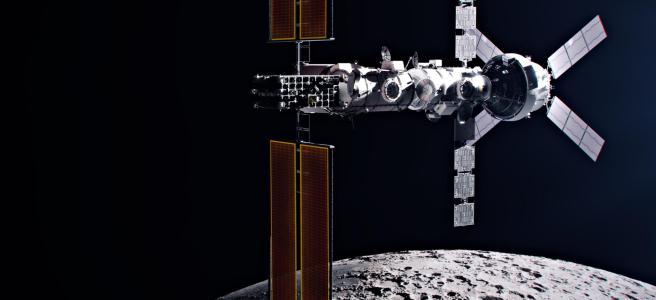
Professor Pogatscher at the forefront of ESA’s Gateway lunar mission
Professor Stefan Pogatscher –– the head of the Department of Metallurgy in our University – is contributing to the "Gateway" lunar mission, an international project aiming to establish an outpost in lunar orbit in the coming years. This station, more distant from Earth than the International Space Station (ISS), will serve as a relay for … Continue reading Professor Pogatscher at the forefront of ESA’s Gateway lunar mission
Collaborative Efforts Aim for Lunar Nuclear Power Amidst Materials Challenges
In a groundbreaking move that has sent ripples through the scientific press, Russia and China have announced plans to join forces for an ambitious collaborative space mission. The focal point of this partnership? The installation of nuclear-powered reactors on the surface of the moon by 2035, marking a significant leap forward in humanity's quest for … Continue reading Collaborative Efforts Aim for Lunar Nuclear Power Amidst Materials Challenges