

20.11.2024 – Press release from the Montanuniversität Leoben, Translated with DeepL.
Access here in German: https://www.unileoben.ac.at/news/montanuniversitaet-leoben-bringt-innovation-ins-all/.
A significant step for space research and the Montanuniversität Leoben: After long preparations, highly developed thin film coatings from Leoben have now arrived at the International Space Station (ISS). The innovative coatings, developed for future space applications, are part of an international research project within the European Materials Aging (EMA) program, funded by the European Space Agency (ESA).
The samples developed by Dr. Megan Cordill (Erich Schmid Institute for Materials Science of the Austrian Academy of Sciences) and Prof. Dr. Christian Mitterer (Department of Materials Science, Montanuniversität Leoben) were recently brought to the ISS as part of the 31st SpaceX resupply mission. In the coming days, the samples will be installed on the EMA platform of the Bartolomeo module, which is located outside the ISS. Here they will have to withstand the extreme conditions of space for at least six months.
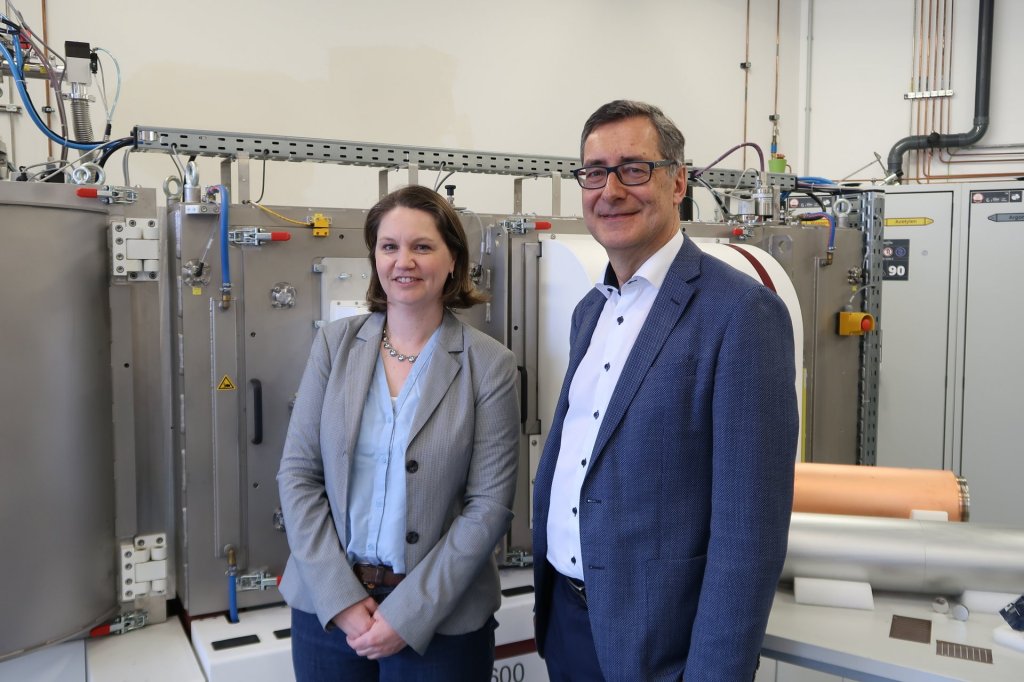
Dr. Megan Cordill and Univ.-Prof. Dr. Christian Mitterer (Credit: MUL/Department Materials Science)
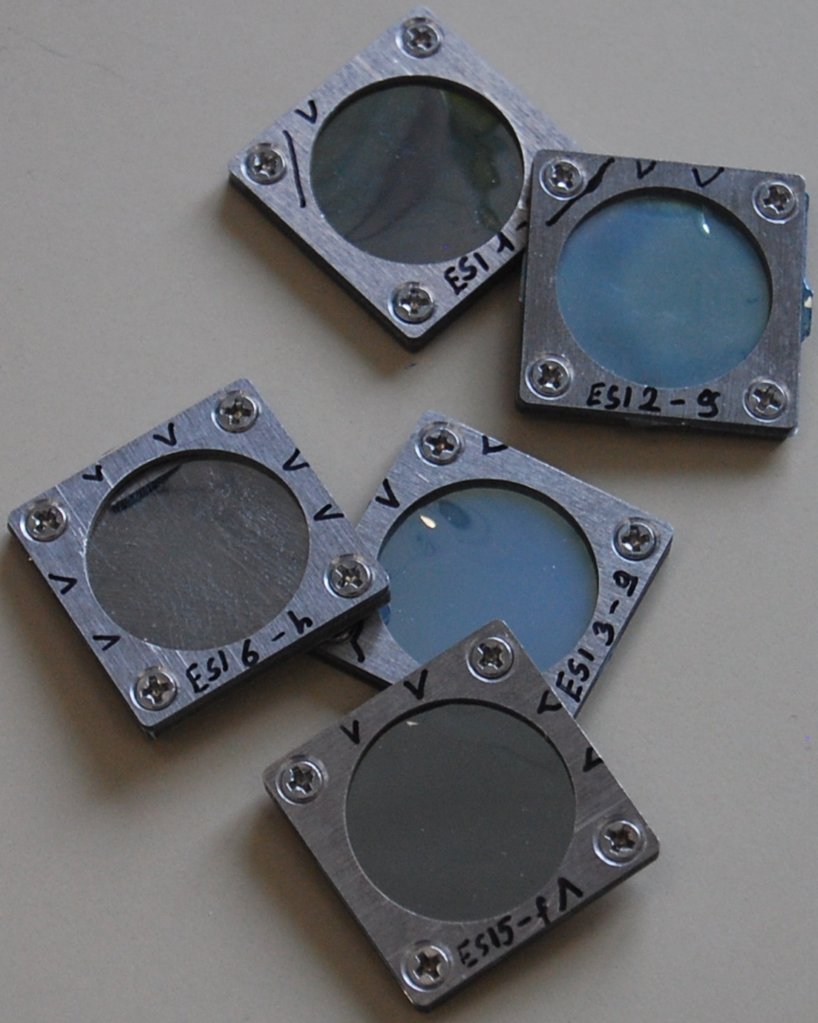
Samples in the millimeter range
The tiny but powerful 20-millimeter coated samples will be tested for their suitability as flexible optical solar reflectors and multilayer insulator foils. These coatings, applied to flexible polymer films, combine transparent protective layers with highly reflective metal films. One day, this could protect sensitive satellite payloads and, thanks to their low weight, save valuable resources. The samples have already been thoroughly tested under terrestrial conditions, and now the team from Montanuniversität and the Erich Schmid Institute is eagerly awaiting to see how the materials perform in the harsh space environment – an environment characterized by radiation, vacuum, extreme temperatures and even space debris.
Important materials research
“We assemble thin-film materials atom by atom, designing materials on the atomic scale. With the achievable properties, our materials better withstand extreme space conditions and enable new applications,” explains Mitterer.
With this research, the team from Leoben is making a valuable contribution to the development of future-oriented materials that are optimized for use in space and could make a decisive difference in future space missions.
Further information
Prof. Dr. Christian Mitterer
Chair of Functional Materials and Materials Systems
E-mail: christian.mitterer(at)unileoben.ac.at
Phone: +43 3842 402 4220

 Materials at Extremes