Folding, thinner, lighter, and stronger wings signals a quiet retreat for aluminium in aerospace

Airbus has just announced the next phase of its Wing of Tomorrow programme: a three-year flight-test campaign, unveiled at Farnborough, that will bolt full-scale wing extensions onto an A321neo to trial the longer, higher-aspect-ratio wings destined for the successor to its best-selling single-aisle family. The extensions are several metres long and stand in for a … Continue reading Folding, thinner, lighter, and stronger wings signals a quiet retreat for aluminium in aerospace

How much radiation damage can you do in seconds?

Qualifying materials for future fission and fusion reactors is painfully slow. Neutron irradiation is costly, time-consuming and leaves samples radioactive, while ion-beam alternatives require competitive proposals and scheduled beam time at oversubscribed accelerator facilities. In a new preprint, we ask whether an instrument already sitting in many microscopy labs β€” the plasma focused ion beam … Continue reading How much radiation damage can you do in seconds?

University of SΓ£o Paulo: Among the best institutions in the world!

Congratulations to my alma matter -- The University of SΓ£o Paulo (USP)in Brazil -- for being selected among the world's top institutions! It has been an honour and a pleasure to be one of your students =] From USP Journal: QS World University Ranking places USP as Brazil’s highest-ranked university In four indicators assessed, USP … Continue reading University of SΓ£o Paulo: Among the best institutions in the world!

New recycling processes or new materials?

The sustainability debate in materials science sometimes asks the wrong questions. How do we recycle more aluminium & steel? These are legitimate β€” but they treat recyclability/sustainability as an afterthought, forcing materials never designed for circularity back into something useful at considerable cost and energy penalty: facts that Europe, specially, cannot anymore afford. The presence … Continue reading New recycling processes or new materials?

“Seeing” hydrogen embrittlement for the first time at the nanoscale

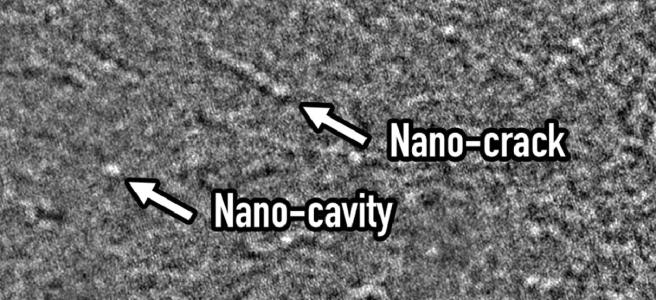
Hydrogen is often celebrated as the clean fuel of the future, but its relationship with metals is far more complicated than it might seem. When hydrogen atoms enter a metal, they can silently weaken it from the inside β€” a phenomenon known as hydrogen embrittlement β€” and despite being recognised for over 150 years, the … Continue reading “Seeing” hydrogen embrittlement for the first time at the nanoscale

Our Paper Among the Most Read Articles on ACS! πŸš€

We are excited to share that our recent perspective review, β€œThe Legacy and the Future of Aluminum Alloys: Space Exploration and Extraterrestrial Settlement,” has been featured among the Top 20 Most Read Articles in the American Chemical Society (ACS) Materials Au! https://pubs.acs.org/action/showMostReadArticles?journalCode=amacgu Most Read Articles are refreshed daily and are based on full-text downloads (PDF … Continue reading Our Paper Among the Most Read Articles on ACS! πŸš€

A snapshot of high-entropy alloy processing techniques and their effects on resulting mechanical properties

With great pleasure I am sharing with you our new review paper entitled "A snapshot of high-entropy alloy processing techniques and their effects on resulting mechanical properties" written by Mr. Christopher Matthews, a brilliant alumni student from the Los Alamos National Laboratory and the Dakota School of Mines, now a Master Student in Metallurgy at … Continue reading A snapshot of high-entropy alloy processing techniques and their effects on resulting mechanical properties

“Zigzag Atoms: Scientists develop material with high technological potential” — The University of SΓ£o Paulo

Our interview to the Brazilian newspaper "Jornal da USP" is now online! "Zip Phases," synthetic materials combining metallic and non-metallic chemical elements, could be used in the future in electronics, energy storage, superconductivity, and sensors. A new class of synthetic intermetallic materials, with unique atomic structures and physical properties offering high technological potential, has been … Continue reading “Zigzag Atoms: Scientists develop material with high technological potential” — The University of SΓ£o Paulo

Materials scientists warn of threat posed by AI-generated experimental images

Interesting media coverage of a Nature Nanotechnology paper drawing the attention of materials science community to the danger of AI-generated microscopy images. Time to rethink the whole concepts of University, Education & Science in a world dominated by AI and fast access to documented information? Yes! News coverage by Royal Society of Chemistry, by Katrina … Continue reading Materials scientists warn of threat posed by AI-generated experimental images