
Share from Uni. of Huddersfield: https://tinyurl.com/y6369ym2 THE University of Huddersfield’s combined electron microscope and ion beam accelerator is a world-class facility responsible for a large and growing global network of research collaborations. One of the latest is a partnership with Brazil’s leading university and the scientific significance of this link and how it could help … Continue reading Huddersfield scientists work with the University of São Paulo engaged on a quest to find materials that can ensure disasters such as the 2011 accident at Japan’s Fukushima Daiichi nuclear power station will not recur.
Author: Matheus A. Tunes
An experimental physicist who enjoys the company of intriguing people and is able to endure many cups of coffee and engage in endless scientific discussions.
Ceramic coatings for Accident Tolerant Fuels (ATF): the case of titanium nitride (TiN)

Our first scientific paper on ceramic coatings for ATFs systems is finally published (in press) at the Journal of Nuclear Materials and it can be downloaded in this link. The paper addresses on the radiation tolerance of nanocrystalline magnetron-sputtered titanium nitride thin films. The coatings were subjected to medium energy heavy-ion irradiation at the homologous … Continue reading Ceramic coatings for Accident Tolerant Fuels (ATF): the case of titanium nitride (TiN)
Are TiN coatings appropriate candidates for accident tolerant fuels?
I am so delighted to announce that our paper "Energetic particle irradiation study of TiN coatings: are these films appropriate for accident tolerant fuels?" has just been accepted for publication at the Journal of Nuclear Materials! In this study, we have used heavy ion irradiation in situ within a Transmission Electron Microscopy to investigate whether Titanium Nitride … Continue reading Are TiN coatings appropriate candidates for accident tolerant fuels?
The history of electronic love between Zirconium and Hydrogen!

In our most recent scientific manuscript published at the Scripta Materialia (https://goo.gl/WScks9) , zircaloy-4 specimens were H-charged up to 1230 wppmH by using a gas-solid reaction at high temperatures. We have used Electron Energy Loss Spectroscopy (EELS) to analyse the signals from the plasmonic emissions of face-centred cubic Zirconium Hydrides (ZrH): the δ-ZrH phase. The mechanisms of ZrH … Continue reading The history of electronic love between Zirconium and Hydrogen!
Inert gas bubbles and voids: a posed challenge for the future of nuclear fusion
Future controlled thermonuclear reactors (CTR) will produce large quantities of He gas. The nuclear fusion reaction between deuterium (D) and tritium (T) nuclei predicts the generation of a highly-energetic He atom (3.5 MeV) and an additional neutron with around of 14 MeV. Compared to current existing nuclear fission reactors, CTRs will be very aggressive environments for … Continue reading Inert gas bubbles and voids: a posed challenge for the future of nuclear fusion
Shaping the future of electronics: nanowires!
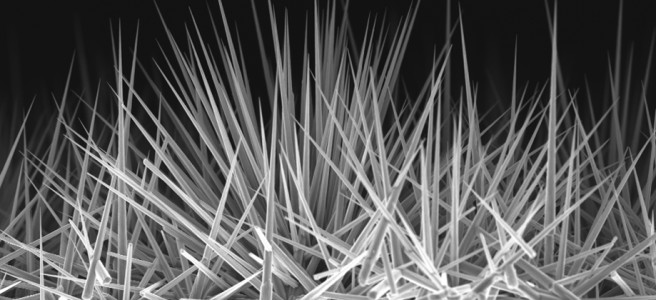
Nanowires (NWs) can be defined as cylindrical-shaped nanostructures with diameter in the order of nanometres and that very recently, have been attracting the attention of scientific community due to its unique set of properties which were found to be promising to compose the next generation of nano-electronic devices. One particular challenge is the synthesis and … Continue reading Shaping the future of electronics: nanowires!
Protective coatings on Zr alloys: a pathway towards Accident Tolerant Fuels in Light-Water Reactors technology
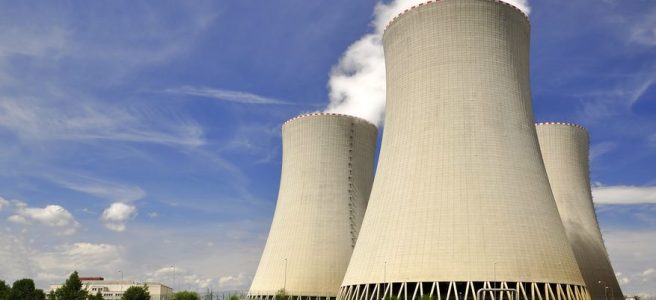
The nuclear accident at Fukushima-Daiichi nuclear power complex in 2011 has started a discussion within the nuclear materials community regarding the safety and the operational limits of Zirconium alloys nuclear fuel rods under extreme conditions. Zirconium is the holy grail of Light-Water Reactors (LWRs) and it is directly responsible for the success of nuclear reactors … Continue reading Protective coatings on Zr alloys: a pathway towards Accident Tolerant Fuels in Light-Water Reactors technology
Do dislocations exist as a real physical entity?

When I was attending in the introductory course in materials science and metallurgy during my master of sciences, one particular question had intrigued myself for long time: are dislocations real physical entities? As a curious student at the time, during the class, I have respectfully raised my hand and asked the professor: -- Do dislocations … Continue reading Do dislocations exist as a real physical entity?
The physical chemistry of brewing a decent coffee
Note: this text was written by Professor Cláudio Schön, my friend and collaborator. I am re-posting here because it is so cool! I am brazilian, therefore I am addicted to coffee. OK, not all brazilians drink coffee, as not all US Americans play baseball. This does not change the fact that I feel miserable if … Continue reading The physical chemistry of brewing a decent coffee
The multidisciplinary interplay in materials sciences: can we understand and mimic the nature?
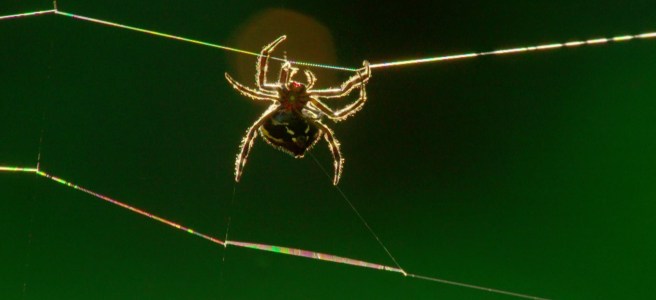
Nature is smart and brilliant. In nature, we can find the best examples on how to biosynthesise a material and use it for several purposes with efficiency. An astonishing case study is the spider silk which is a form protein fibre structurally similar to cellulose and human hair. Looking at the nanoscale, Transmission Electron Microscopy … Continue reading The multidisciplinary interplay in materials sciences: can we understand and mimic the nature?

