Built for cars, but ready for space: A warm welcome to AMAG CrossAlloy®57!

For decades, aluminium alloys forced a choice: the 5xxx family is easy to form but only moderately strong, while the 7xxx family is strong but difficult to process. The crossover concept, developed at Montanuniversität Leoben by the research group of Prof. Stefan Pogatscher, removes that trade-off. A tuned combination of magnesium, zinc and, in some … Continue reading Built for cars, but ready for space: A warm welcome to AMAG CrossAlloy®57!
One-grain-at-a-time: how in situ EBSD rewrote sink-strength theory for space aluminium

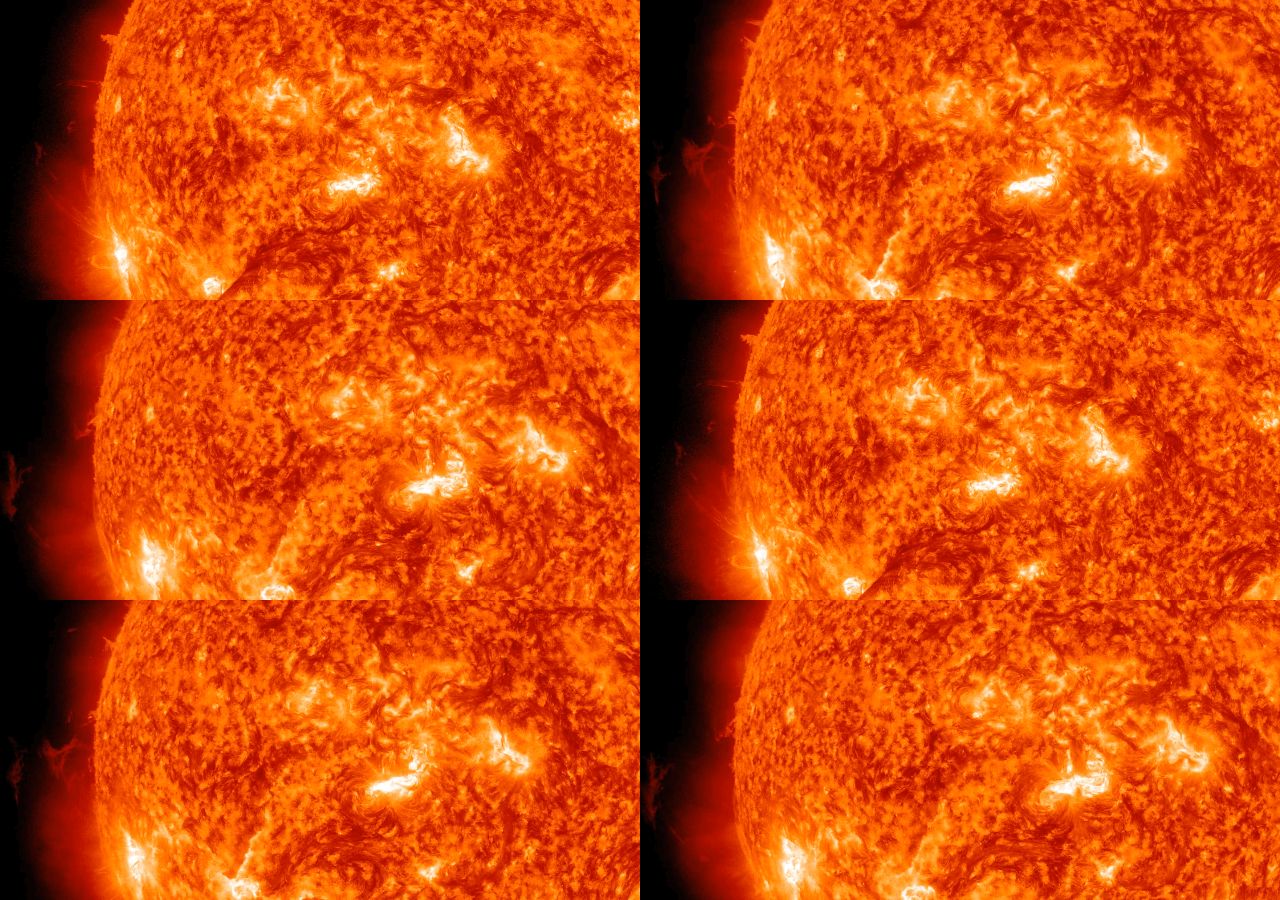
Ultrafine-grained (UFG) aluminium alloys are strong candidates for space structures: their dense grain-boundary network acts as sinks that absorb radiation-induced defects (more in our perspective review https://doi.org/10.1021/acsmaterialsau.5c00139). But that advantage only survives if the microstructure does — and in Low-Earth Orbit, sunlit components reach ~200 °C, right where severely deformed aluminium begins to recrystallise. The … Continue reading One-grain-at-a-time: how in situ EBSD rewrote sink-strength theory for space aluminium

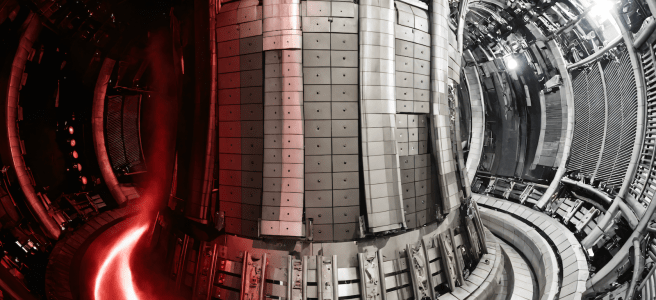
Leoben makes waves in fusion materials research

The [X-MAT] team at the Chair of Nonferrous Metallurgy, Montanuniversität Leoben, has drawn global attention with a groundbreaking study published in Advanced Science (DOI: 10.1002/advs.202417659). With more than 1k views and reads in the journal's first month after publication, our work challenges the prevailing high-entropy alloy (HEA) paradigm by proving that even simpler alloy systems can outperform their … Continue reading Leoben makes waves in fusion materials research