

What will the materials powering tomorrow’s clean energy systems, quantum computers, and deep-space missions actually be made of — and how do we design them?
We are thrilled to share our latest featured article in The European magazine, where we explore how cutting-edge research is engineering matter at the atomic scale. From the nanolaminated MAX phase ceramics being tailored for nuclear and fusion applications, to the newly discovered ZIP phases — a family of ternary intermetallics exhibiting remarkable properties including superconductivity and ferromagnetism — the article maps a rapidly expanding frontier of materials science with real strategic implications for Europe’s technological sovereignty.
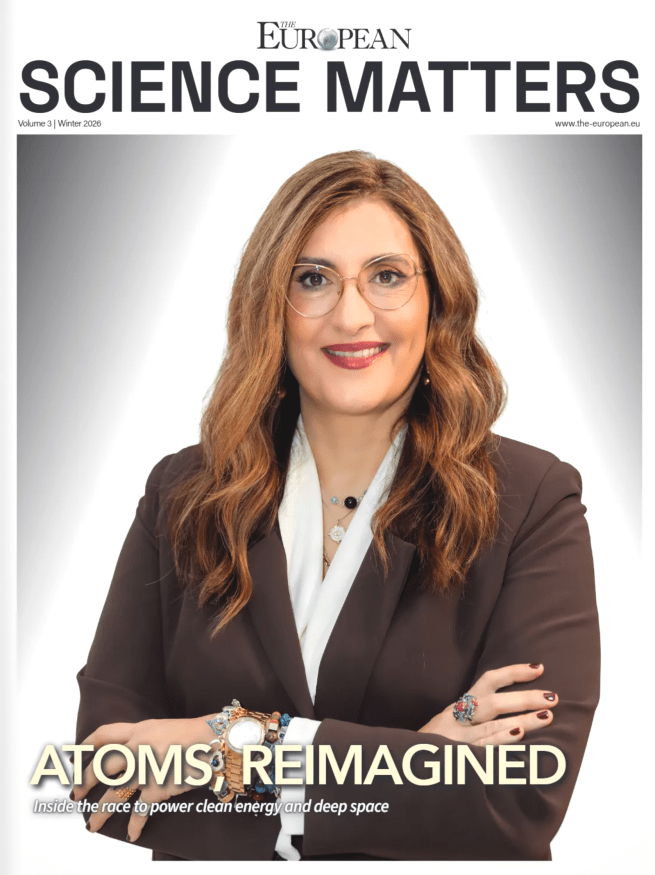
The European is a global business magazine established in 2008 and it covers finance, sustainability, technology, energy, leadership, and emerging market trends, positioning itself as a voice for international business through both print and digital formats. Its journalism is syndicated across Europe through the European Digital Content Exchange Network — the first initiative of its kind on the continent — extending its reach to boardrooms and decision-makers worldwide.
The piece also ventures into the reinvention of aluminium metallurgy for space exploration, with research from Montanuniversität Leoben’s [X-MAT] Laboratory demonstrating that radiation tolerance can be engineered into lightweight alloys through careful microstructural design — without sacrificing the properties that make aluminium indispensable for spaceflight. Whether you are interested in the science of 2D MXene nanocomposites or the broader challenge of securing Europe’s place in the next space age, this is a compelling read.
Access to the special coverage of our research at The European magazine here: 👉 https://the-european.eu/story-56895/building-the-materials-of-tomorrow-one-atom-at-a-time-fiction-or-reality.html

 Materials at Extremes