
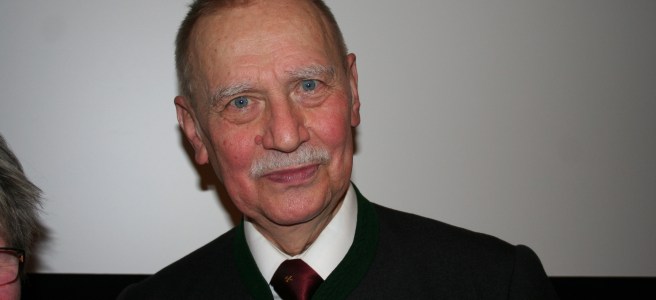
There are scientists whose work is best understood through instruments, and there are those whose work is best understood through time. Gerhard Sperl – who passed away on Easter Monday, 5 April 2021, at the age of 84 — belonged firmly to the second kind, though he was thoroughly at home with the first.
Born on 24 April 1936 in Göß, then a village on the outskirts of Leoben in Styria, Sperl grew up in the heartland of Austrian mining culture. He would never leave it — not truly — even during the years he spent in Innsbruck, Freiburg im Breisgau, and Ravello. Leoben was the centre of gravity around which his entire career orbited.
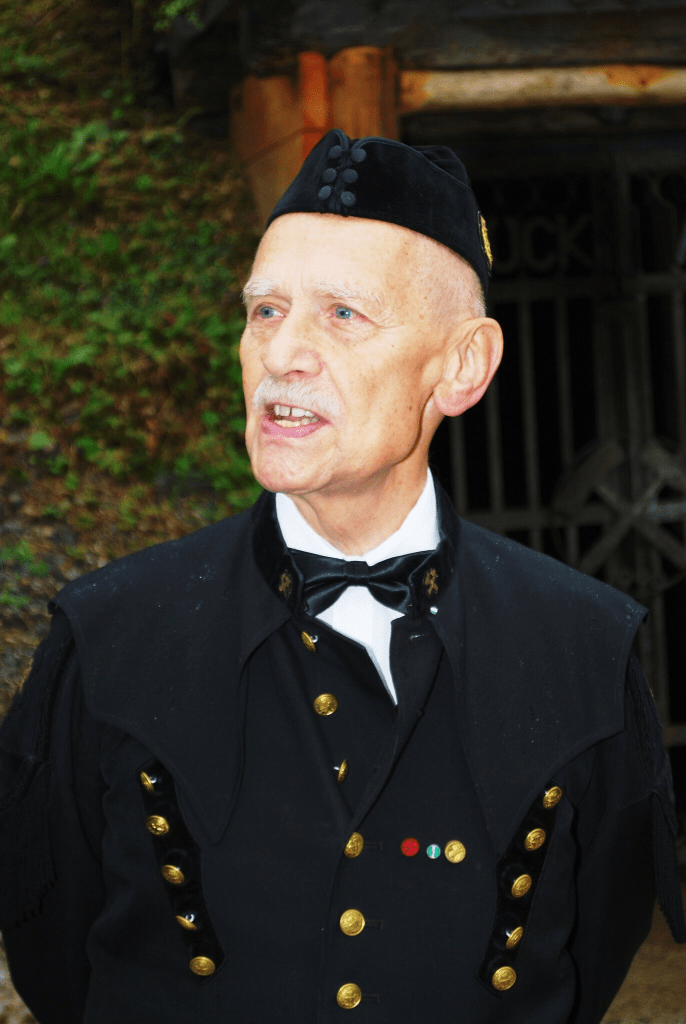
Two degrees, one vocation
Sperl graduated from the Stiftsgymnasium Seckau with distinction in 1954 before enrolling in metallurgy at the Montanistische Hochschule Leoben, from which he earned his Dipl.-Ing. in 1961 and his Dr.mont. in 1970. What is striking, in retrospect, is what he did in between: beginning in 1963, while already working at the Tiroler Röhren- und Metallwerke AG, he enrolled at the University of Innsbruck to study the languages and cultures of the Ancient Near East, Classical Archaeology, and Prehistory. Twenty years after starting that second degree, he completed it — with a Dr.phil. in 1983.
This was not a curious detour. It was the very structure of his thinking. Sperl was not a materials scientist who dabbled in history, nor a historian who knew a little about metal. He was genuinely both — and the combination gave him a research agenda that neither discipline could have produced alone.
From semiconductors to slag
After his doctorate in mining science, Sperl moved into industrial research. He led a process engineering group for semiconductor quality control at the Intermetall facility of Deutsche ITT Industries in Freiburg, then moved to the Institut für Festkörpermechanik of the Fraunhofer Gesellschaft. These were demanding, technically precise environments, and they sharpened his experimental instincts considerably.
In 1974, he joined the Erich-Schmid-Institut für Materialwissenschaft of the Austrian Academy of Sciences in Leoben, where he would remain until his retirement in 2001. It was here that the two sides of his education finally converged. Working within an institute devoted to the physics and mechanics of materials, Sperl carved out a research programme focused on what metals could tell us about the past: the composition of Bronze Age copper artefacts, the microstructure of ancient iron objects, and above all the chemistry of historical slags. Absolutely extraordinary work documented in the list of references I provide with this text!
The archaeology of making
Slag — the waste product of smelting — is not, on the face of it, glamorous material. But Sperl recognised it as a kind of frozen ledger: a record of the temperatures, ores, and techniques used by smiths who left no written accounts. His work on slag analysis as a dating tool for ancient smelting operations became internationally recognised, placing him among the leading figures in the emerging discipline of archaeometallurgy.
His application of metallographic methods to archaeological specimens was similarly far-reaching. By examining the microstructure of ancient copper and iron under the microscope, he could read the manufacturing decisions of craftsmen working millennia before. A Bronze Age blade, properly prepared and examined, could reveal whether its maker had annealed it, cold-worked it, or alloyed it deliberately. His papers in this area, several of which appeared in Microscopy and Microanalysis, brought these techniques to an audience well beyond alpine archaeology.
His particular passion was the Italian and Alpine regions. He devoted sustained attention to Etruscan metallurgy and taught at the Europa Institut in Ravello — in multiple languages — for two years. He was also drawn into the remarkable story of the Ötztal Iceman: when Ötzi was discovered on the Tisenjoch glacier in 1991, Sperl contributed to the analysis of the copper axe blade that the mummy carried, helping to situate that extraordinary artefact within the broader context of Alpine copper production in the late third millennium BC.
Building the iron roads
For Sperl, scholarship was never entirely separable from stewardship. One of the earliest expressions of this was the Steirische Eisenstraße — the Styrian Iron Road — a cultural and historical itinerary connecting the sites of iron production across Styria that he co-founded in 1978. The project gave new purpose to monuments and buildings that had fallen into neglect, including the Laurentikirche in Vordernberg, and proved influential enough to inspire a broader successor initiative: the Mitteleuropäische Eisenstraße, a transnational network connecting iron heritage sites across Central Europe, supported by specialists from several countries and by the Council of Europe.
These were not merely academic exercises. Sperl believed, with evident conviction, that the history of metalworking was part of the cultural inheritance of the communities built around it — and that it deserved to be made accessible beyond the seminar room. He also founded the Arbeitskreis Paltental, served as Vice-President of the Verein der Freunde des Radwerkes IV, and was a founding member in 1976 of the Montanhistorischer Verein Österreich, which he went on to lead as President from 2004.
Habilitation and the professor’s chair
In 1989, Sperl habilitated in Montanarchäologie within the Faculty of Humanities at the University of Vienna — a formal recognition that his interdisciplinary work constituted a coherent and teachable field. He received the title of außerordentlicher Universitätsprofessor in 1999. His teaching, by all accounts, was marked by the same quality that distinguished his research: an infectious enthusiasm, a refusal to separate technical understanding from historical imagination, and a genuine care for his students.
Between 1980 and 1989, he also served as Second Deputy Mayor of Leoben — a city he loved and served in ways that were entirely his own.
An unfinished archive
His final project was characteristic: he set out to establish a montanhistorical archive in the former Raithaus in Vordernberg, to provide students and interested members of the public with a working resource on the mining history of the region. He did not live to complete it. It stands as a reminder that some legacies are works in progress, and that those who care about a field have reason to take them up.
Gerhard Sperl is survived by his wife and three children. He is buried at the Zentralfriedhof in Leoben — the city that shaped him, and that he helped, in return, to understand itself.
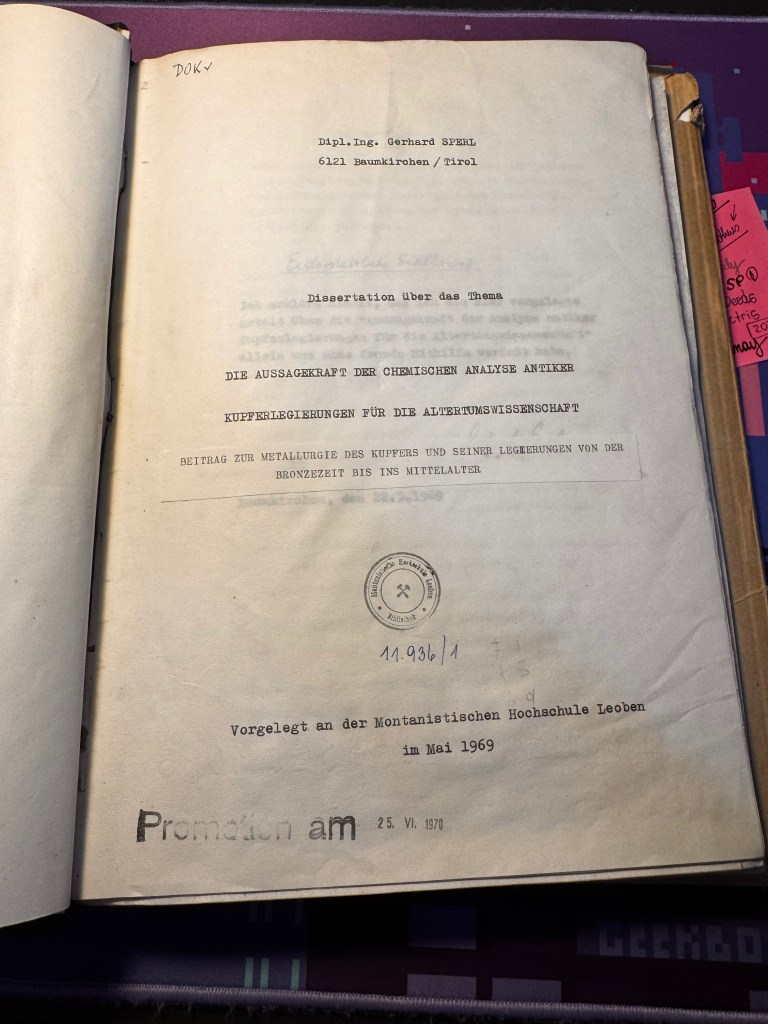
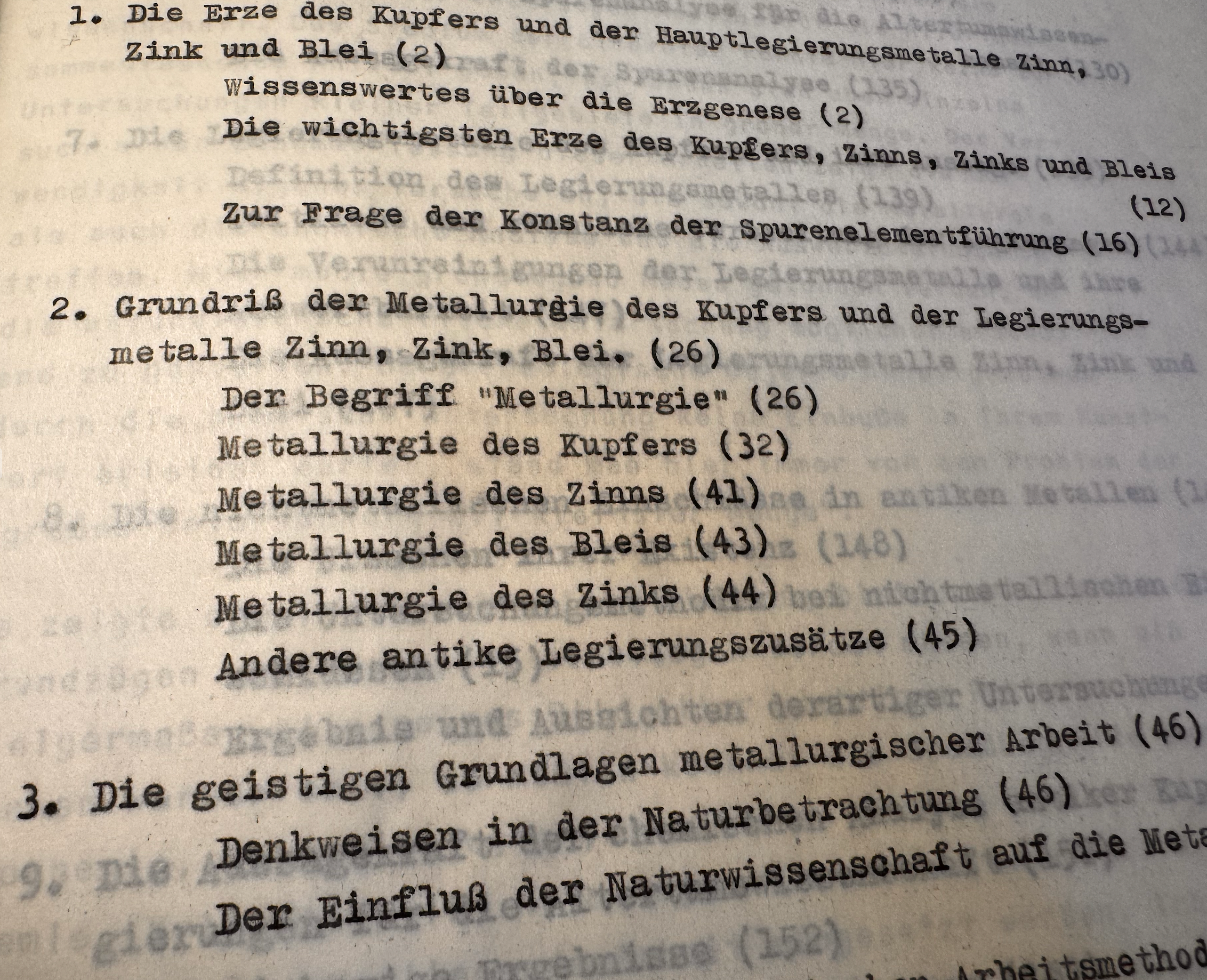
Personal note: The PhD thesis of Professor Sperl is an extraordinary work of Nonferrous Metallurgy! It is available for borrowing at the major library in our University. I wish I could have met him in person in this life! A latest Glückauf!
Gerhard Sperl, Die Aussagekraft der Chemischen Analyse Antiker Kupferlegierungen für die Altertumwissenschaft, 1969.
Bibliography
[1] Sperl, G. (1980). Metallographic examination of Bronze Age copper. Metals Technology, 7, 212–217.
[2] Sperl, G. (1990). Zur Urgeschichte des Bleies. Vol. 81.
[3] Sperl, G. (2003). The use of metallography in archaeological studies. Microscopy and Microanalysis, 9, 554–555.
[4] Sperl, G. (2003). Dating of iron artefacts by metallographical methods. Microscopy and Microanalysis, 9, 558–559.
[5] Sperl, G. (2003). Scientific research on remains of the Late-Bronze-Age copper production in the Alps. Microscopy and Microanalysis, 9, 654–655.
[6] Erich-Schmid-Institut für Materialwissenschaft, ÖAW. Obituary: Univ.-Prof. Dipl.-Ing. Dr.mont. Dr.phil. Gerhard Sperl (13 April 2021). oeaw.ac.at
[7] Österreichischer Cartellverband. Biolex entry: Vz.Bgm. a.D. Univ.-Prof. Dipl.-Ing. Dr. Dr. Gerhard Sperl. oecv.at
[8] MeinBezirk Leoben. Trauer um Gerhard Sperl (9 April 2021). meinbezirk.at


