The world of culture and the world of science lost a singular figure yesterday when Sir Patrick Stewart passed away on 28 October 2026 at his home in Los Angeles. He was 86. Most will remember him as the embodiment of Captain Jean-Luc Picard or Professor Charles Xavier — roles he imbued with a Shakespearean gravity that transcended genre entirely. But for those of us who trained at the University of Huddersfield, Sir Patrick was something else altogether: the Emeritus Chancellor who understood, with genuine curiosity, that the most profound science was being done quietly in the laboratories around him.
https://www.bbc.com/news/articles/cm20v3029p5xo
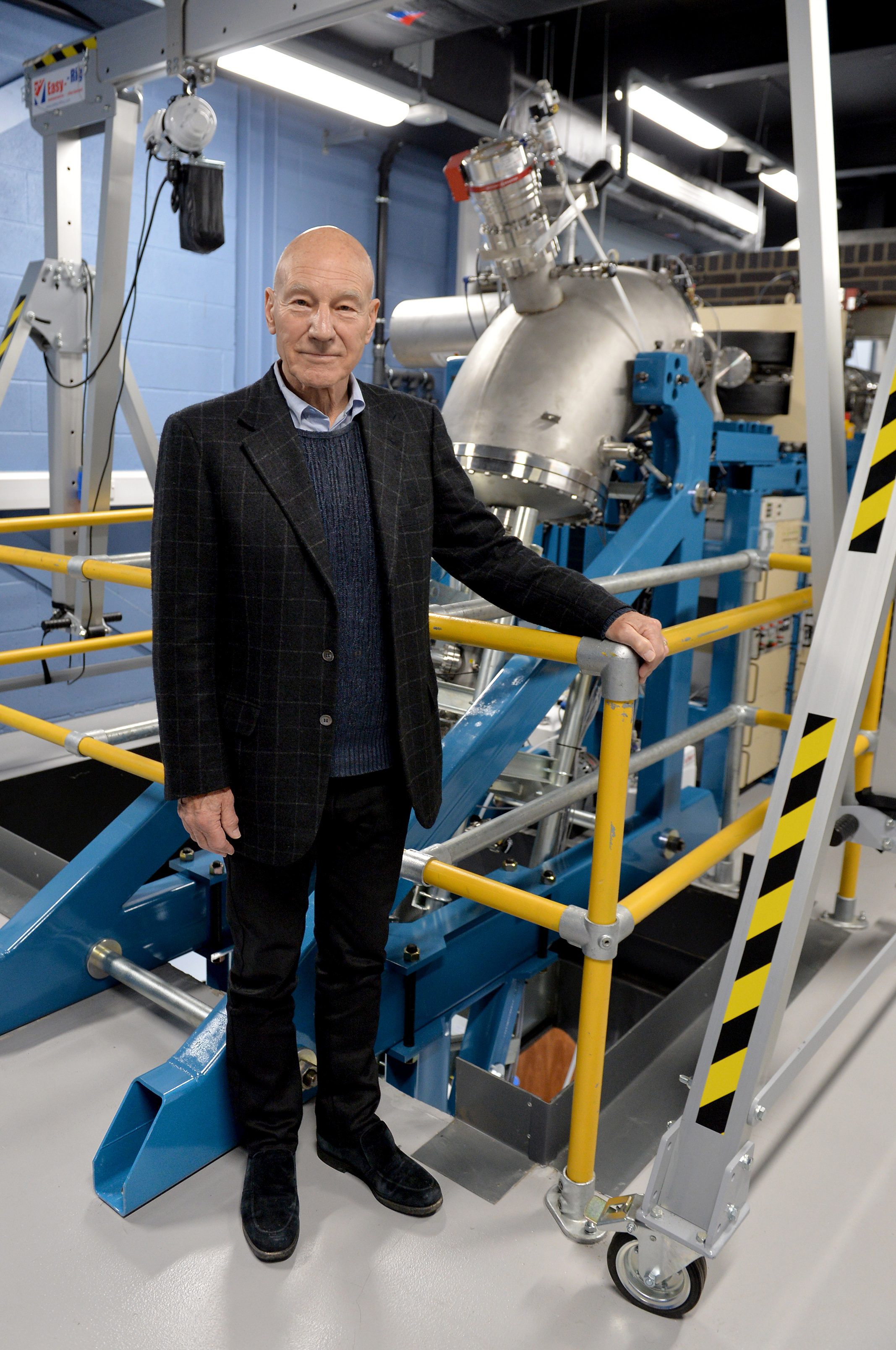
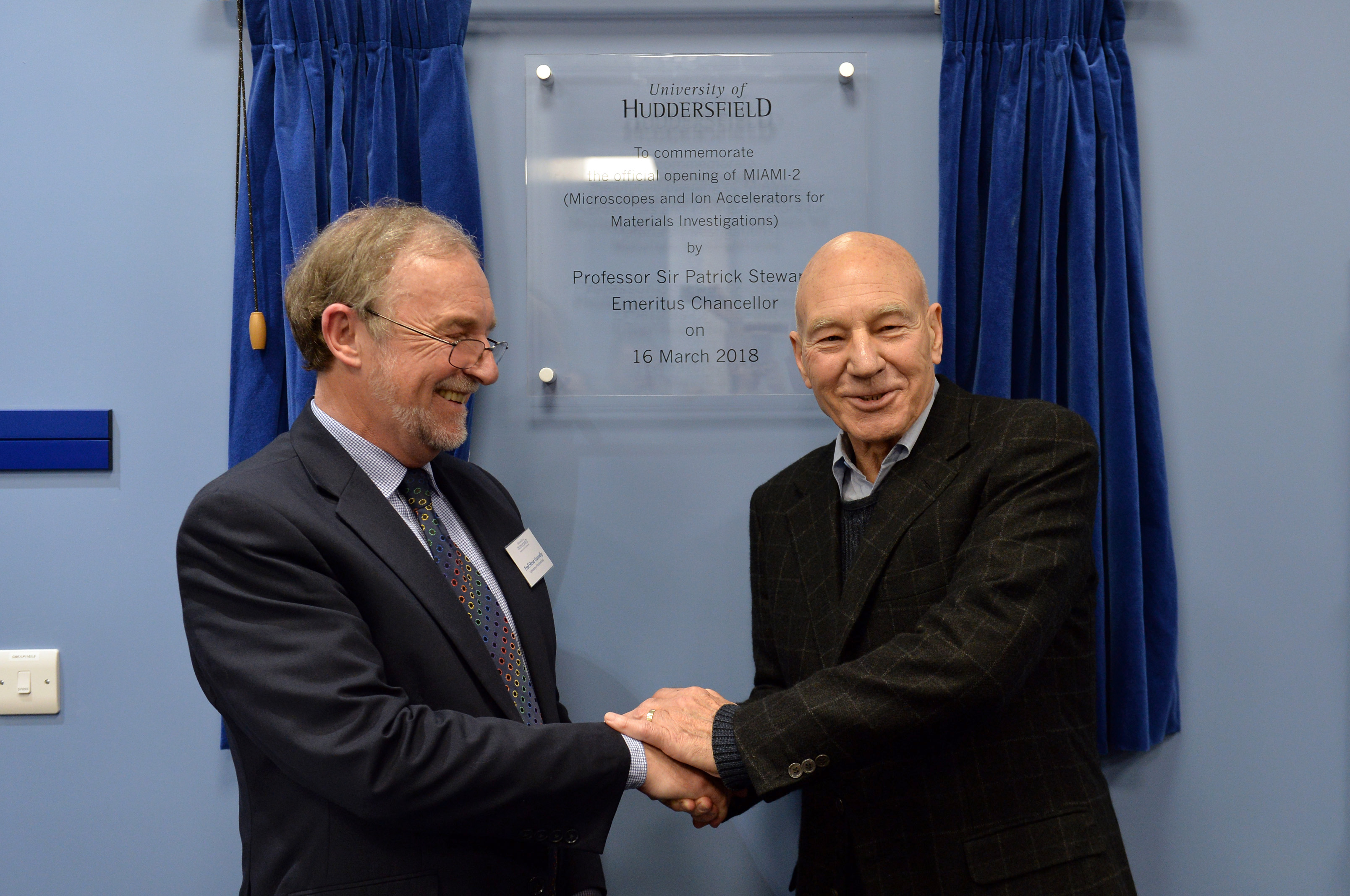
That was made vivid in March 2018, when Sir Patrick officially opened MIAMI-2 — Europe’s only dual-beam ion accelerator of its kind, a £3.5 million facility purpose-built for the study of radiation damage in materials — and did so alongside the facility’s originator, Professor Stephen Donnelly, my own PhD supervisor. To be present in that room as a young researcher — to watch a figure of such stature stand before an instrument that would anchor years of one’s own doctoral work and simply say, “Every time I visit, there is something new and remarkable” — was, without exaggeration, one of the more quietly memorable moments of my early career. It reminded me that science, at its best, inspires wonder in anyone willing to look. Sir Patrick was always willing to look.
A latest Glück Auf!
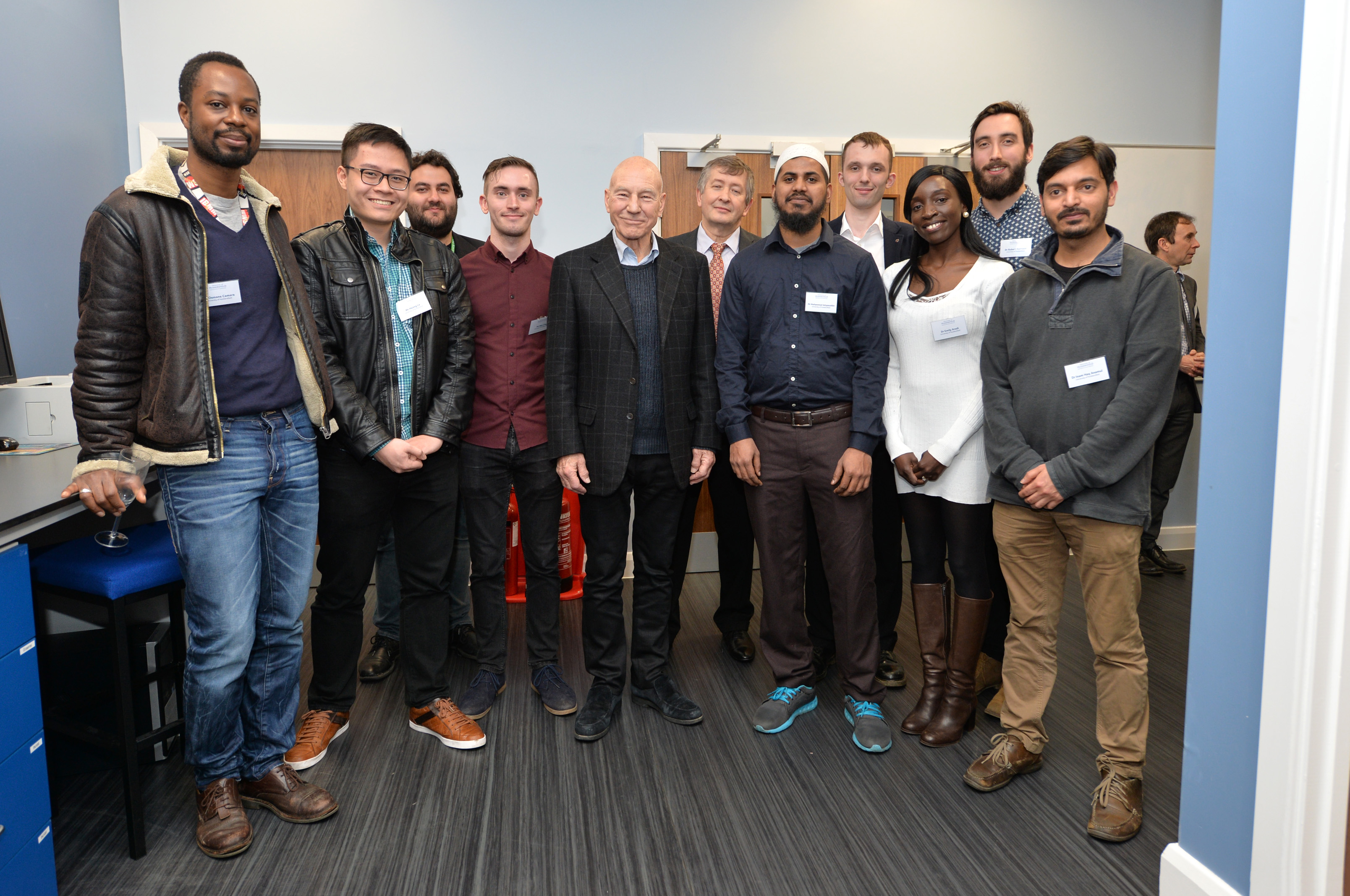
From left to right: Dr. Osmane Camara, Dr. Huang Lee, me, Dr. Ben Clay, Sir Patrick Stewart, Professor Vladmir Vishnyakov, Dr. Mohammed Uddin, Dr. Jacob Fell, Dr. Emily Aradi, Dr. Robert Harrison, and Dr. Anamul Haq Jeri