What does pilot-scale methane pyrolysis actually produce?
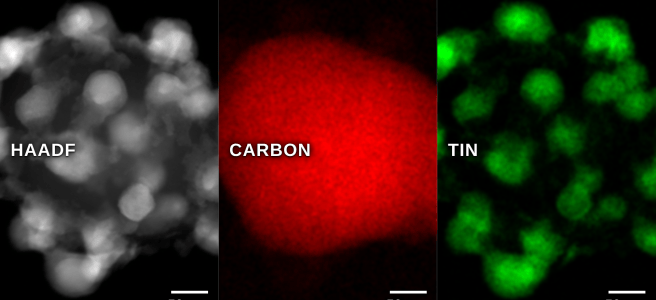
Producing hydrogen from methane without releasing CO₂ is one of the more promising routes towards a lower-carbon energy system — but the solid carbon coproduct is an equal part of the story. When methane decomposes thermally in a molten tin bath, the carbon that emerges must be characterised, understood, and ultimately valorised if the process … Continue reading What does pilot-scale methane pyrolysis actually produce?

Rethinking how cold spray really bonds dissimilar metals

Cold spray sounds almost too simple to work: fire a metal particle at a surface fast enough, and it sticks – no melting, no welding, just brute plastic deformation smashing a bond into place. That has been the textbook story for two decades. But in our latest paper with colleagues at Politecnico di Milano and … Continue reading Rethinking how cold spray really bonds dissimilar metals

One-grain-at-a-time: how in situ EBSD rewrote sink-strength theory for space aluminium

Ultrafine-grained (UFG) aluminium alloys are strong candidates for space structures: their dense grain-boundary network acts as sinks that absorb radiation-induced defects (more in our perspective review https://doi.org/10.1021/acsmaterialsau.5c00139). But that advantage only survives if the microstructure does — and in Low-Earth Orbit, sunlit components reach ~200 °C, right where severely deformed aluminium begins to recrystallise. The … Continue reading One-grain-at-a-time: how in situ EBSD rewrote sink-strength theory for space aluminium